The global cycle remains supportive in the short term
Link

PMI mondial au plus haut depuis plusieurs années, croissance américaine révisée à la hausse, activité industrielle en amélioration et poursuite de la normalisation monétaire au Japon... Xavier Chapard revient sur les principaux faits marquants de septembre et leurs implications pour les marchés.
Overview
►The global manufacturing PMI rose further in September to 53.0, its highest level since early 2022. This improvement is broad-based, with continued strength in the U.S. and a modest recovery in China helping to lift Europe and the rest of Asia. The data suggest that the momentum in the technology sector, the recovery in manufacturing beyond tech, and a gradual inventory rebuild are continuing despite recent headwinds. This is encouraging for the resilience of global growth in the coming months and supports our moderately positive outlook for risk assets through year-end.
►Moreover, in the United States, revisions to macroeconomic data suggest that growth is even stronger and somewhat less inflationary than previously thought. Growth for the first two quarters was revised upward from 1.9% to 2.4%, driven by stronger final domestic demand and higher incomes than initially estimated. Consumer spending also remained robust over the summer, although it continues to be supported by a lower savings rate.
Most importantly, the Fed’s preferred inflation measure, Core PCE, indicates that inflation is slightly lower than previously estimated (3.0% rather than 3.3%) and has not meaningfully reaccelerated since the end of last year. This reduces both the urgency and the scale of further rate hikes that may be required from the Federal Reserve.
►That said, with inflation still around one percentage point above target and showing little sign of further easing, the Fed is unlikely to completely halt its monetary policy recalibration, especially given the strength of economic activity and the stability of the labor market. This reinforces our conviction in our base-case scenario, which calls for only one additional rate hike this year, in December, followed by a likely final increase in early 2027.
►In Japan, the quarterly Tankan survey should reassure the Bank of Japan in its intention to continue normalizing monetary policy at a somewhat faster pace. Indeed, businesses report that economic conditions remain highly favorable, inflationary pressures continue to build, and financing conditions are still supportive despite the rate hikes already implemented. The BoJ is the only major central bank for which we believe market rate expectations remain reasonable, with one additional rate hike expected this year and two more next year.
►At the ECB, Isabel Schnabel has announced her early departure in early 2027, while Christine Lagarde has suggested that she could leave “a few months” before the end of her mandate in October 2027. This sets the stage for negotiations among European leaders over the appointments of the institution’s three most senior officials.
The leading candidates to succeed the ECB President are Pablo Hernández de Cos, who is generally viewed as more dovish, and Klaas Knot, who is considered more hawkish. However, this choice is likely to be balanced by the appointment of other policymakers with differing views, and we do not expect it to have a significant impact on the ECB’s monetary policy stance in the near term.
For now, national data suggest that inflation may have accelerated slightly more than expected in September, potentially reaching around 3.8%, while the unemployment rate remained stable at just 6.4% in August. This should reinforce the ECB’s determination to continue raising interest rates. However, the European Commission’s September survey indicates that companies remain cautious when increasing selling prices, particularly in the services sector. This suggests that the pass-through of higher energy costs to broader price levels remains limited, as has been the case since the onset of the conflict with Iran.
Overall, we continue to expect the ECB to raise rates in December and likely again in March, but neither as quickly nor as aggressively as current market expectations imply.
►The 2027 budget presented by the French government brought no real surprises. It incorporates a fiscal tightening that is just sufficient to remain broadly in line with European commitments, without introducing major structural adjustments only seven months ahead of the presidential election.
Following another fiscal slippage this year, with the budget deficit expected to reach 5.4% of GDP instead of the previously projected 5.0%, owing to weaker growth and higher-than-expected inflation and interest rates, the government is targeting a deficit of 5.0% of GDP in 2027. Fiscal tightening is estimated at around 0.6 percentage points of GDP, rather than the 1.1 percentage points officially announced, with roughly two-thirds coming from lower spending and one-third from higher taxes.
This fiscal adjustment, combined with ongoing political uncertainty, makes the government’s 1.0% growth forecast for next year appear optimistic. As a result, the budget deficit is likely to remain above 5.0% of GDP when the next president takes office.
►Even if this budget is ultimately adopted without major changes, whether through Article 49.3 or by ordinance, and thereby buys some time, it is unlikely to restore market confidence in France’s ability to implement the adjustments needed to place public finances on a sustainable medium-term path.
Against this backdrop, we remain cautious on French government bonds, despite the spread over German Bunds having reached its highest level since Mario Draghi’s 2012 “whatever it takes” speech.
To go further
Global: The Industrial Cycle Continued to Improve in September
Global manufacturing PMI reaches its highest level in five years
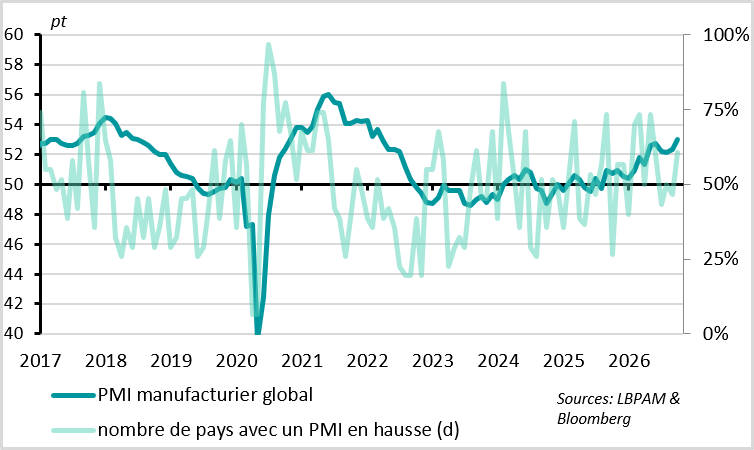
The global manufacturing PMI rose again in September, increasing by 0.7 points to 53.0, its highest level since early 2022. At this level, it is consistent with industrial production growth of around 3.5%. The data suggest that the technology boom, the cyclical recovery in manufacturing beyond the tech sector, and some inventory rebuilding are enabling industrial activity to grow faster than its long-term trend despite the negative headwinds from higher energy prices and interest rates. This is reassuring for the global economic outlook in the months ahead.
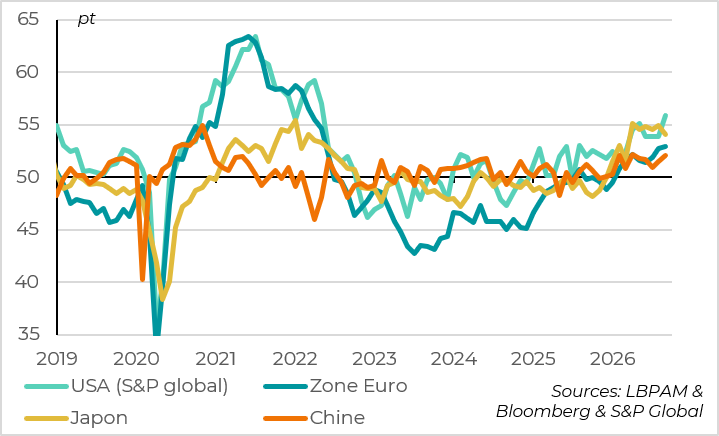
Most importantly, this cyclical improvement is broad-based. Indeed, the PMI increased in September in two-thirds of the countries covered by the survey. The U.S. manufacturing PMI continues to outperform, although the ISM indicator is somewhat lower, remaining stable at 54.6 compared with 55.9 for the S&P Global PMI. Following revisions, however, the PMI also improved in the euro area (52.9) and across emerging markets (51.9). This is particularly true in China, where the index is approaching its post-Covid highs (52.1). China’s official PMI also moved higher, rising back above the 50-point threshold for the first time in three months.
Les industriels restent prudents malgré la hausse des commandes
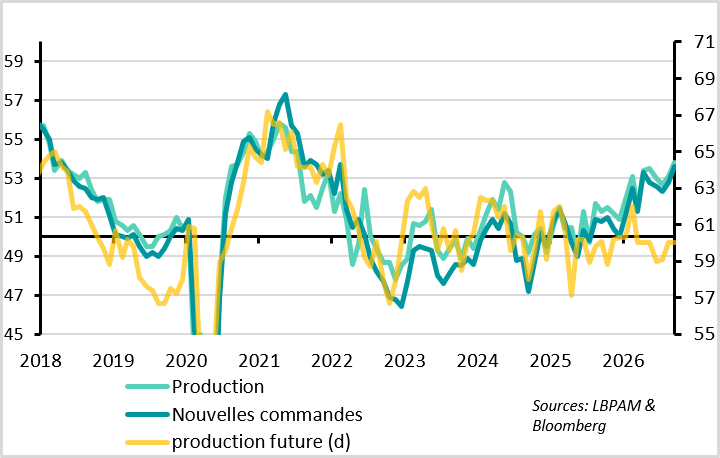
The details of the PMI survey are also fairly encouraging, as the increase in output is being accompanied by rising new orders and stronger employment. The main disappointment comes from companies’ expectations for the months ahead, which remain surprisingly subdued given the current strength of activity. This suggests that businesses continue to exercise caution in the face of numerous risks. However, this prudence has not prevented the industrial cycle from improving since the outbreak of the conflict with Iran.
United States: Positive Developments Ease Pressure on the Fed
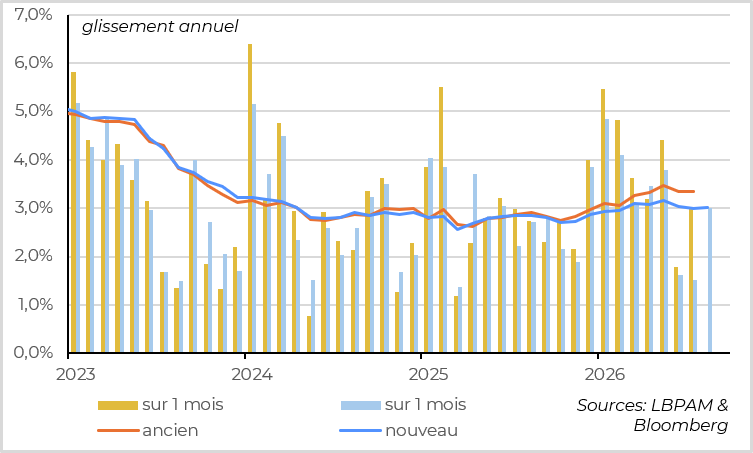
The Fed’s preferred inflation gauge, the Core Personal Consumption Expenditures (Core PCE) price index, rose by 0.25% in August, slightly below expectations. More importantly, the data for earlier months were revised significantly lower. As a result, core inflation stood at 3.0% in August, compared with the 3.3% previously estimated for July.
Most notably, inflation now appears to have accelerated much less since the end of last year than earlier data had suggested, while it has moderated more noticeably over the summer. Over the past three months, core inflation has averaged 2.0%, down from the 3.0% pace estimated at the end of July.
Downward revisions had been expected due to methodological changes in the calculation of financial services prices as well as computer software and hardware prices, and given the gap between this inflation measure and core CPI inflation (2.4% in August). However, the revisions proved to be roughly twice as large as economists had anticipated, suggesting stable rather than increasing underlying inflationary pressures.
Inflation that is both lower and showing no signs of reaccelerating is good news for the Fed, reducing both the urgency and the scale of additional rate hikes that may be required. That said, core inflation remains well above target, still around one percentage point too high. Moreover, the latest data do not yet show a clear and sustained slowdown, as the three-month inflation measure is likely understating the underlying trend. As a result, this development is unlikely to be sufficient for the Fed to reconsider the additional rate hike it signaled for later this year at its September meeting.
U.S. Growth Revised Upward in H1 on Stronger Domestic Demand
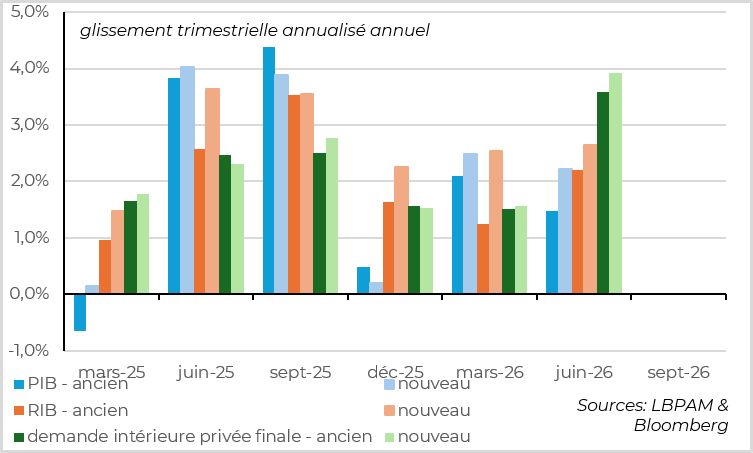
Growth has also been revised upward for the beginning of the year and appears stronger than initially reported.
Second-quarter GDP growth was revised up from 1.5% to 2.2%, while first-quarter growth was revised from 2.2% to 2.5%. Moreover, this roughly 2.5% growth rate over the first half of the year appears more sustainable, as it is accompanied by stronger real income growth, which is now estimated at 2.5% and 2.6% in the first two quarters, respectively. Growth in the second quarter was also increasingly driven by consumer spending and business investment, rather than by lower imports and a rebound in government spending.
Indeed, final private domestic demand (excluding inventories) accelerated from 1.8% in Q4 2025 and Q1 2026 to 4.6% in Q2, highlighting the underlying strength of the U.S. economy and the resilience of private-sector activity.
Consumer Spending Remains Strong This Summer Despite a Further Decline in the Savings Rate
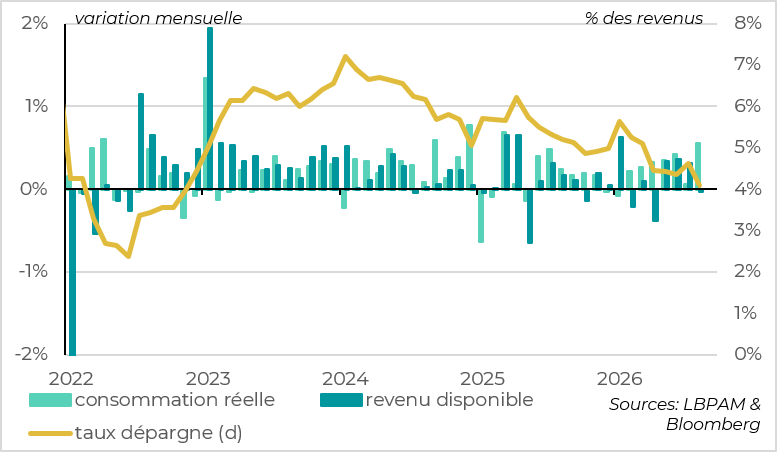
Consumer spending appears to have remained very strong in the third quarter. It increased by 0.6% in August after July growth was revised to 0.1%, when spending was temporarily affected by the payback from online sales promotions that had been brought forward to June. As a result, the carry-over growth rate for Q3 rose from 1.8% at the end of July to 3.3% at the end of August, bringing it close to the 3.8% pace recorded in Q2.
That said, household income growth has become less dynamic due to slower wage gains, and real incomes even declined in August as a result of higher inflation. Consequently, the savings rate continues to fall. Although it is less extreme than previously estimated following the revisions (4.4% in Q2 rather than 2.8%), the savings rate nevertheless fell to 4.1% in August, its lowest level since mid-2022.
Consumer spending therefore appears somewhat more sustainable than previously thought, but it still relies heavily on favorable wealth effects and is likely to slow if the energy shock persists and the labor market does not show a more convincing recovery.
Japan: Strong Corporate Conditions Support Further BoJ Rate Hikes
Japan: Corporate Conditions Remain Very Favorable This Summer
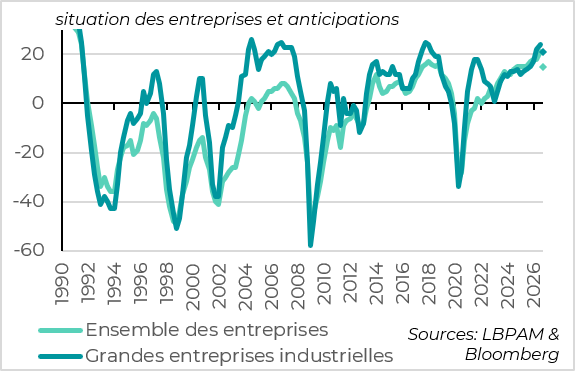
According to the quarterly Tankan survey, Japanese corporate conditions remained exceptionally strong over the summer, reaching their highest level since the early 1990s (+21). The improvement was driven primarily by manufacturing firms, which reported business conditions at their best level in eight years (24), surpassing even pre-pandemic levels. Non-manufacturing companies reported a slight decline in confidence, but sentiment remains close to its highest level in three decades (+35).
As is often the case, Japanese companies remain cautious regarding the outlook. Nevertheless, they expect business conditions to remain highly favorable in the third quarter (+15), indicating continued confidence in the economic environment.
This is consistent with trend growth of around 1%, which remains well above the Japanese economy’s estimated potential growth rate of approximately 0.5%.
Euro Area: PMIs Validate the ECB’s Hawkish Stance
Strong Pricing Power and Stable Inflation Expectations
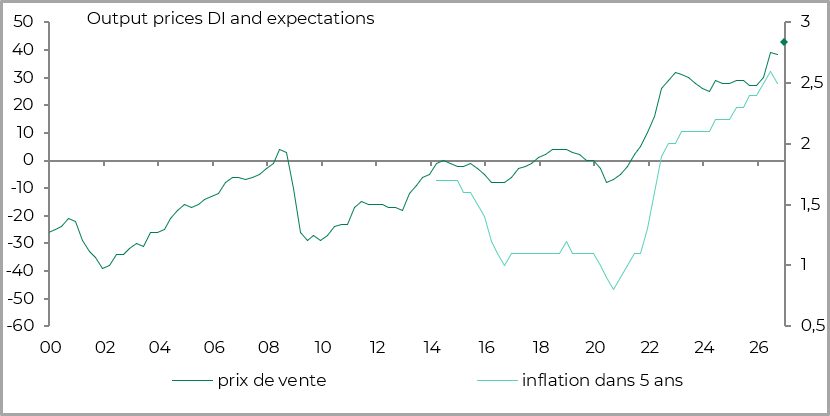
Regarding prices, Japanese companies reported that they are still raising selling prices at the fastest pace on record in Q3 and do not expect any slowdown by year-end. These price increases are broad-based across sectors and company sizes, supported by increasingly tight labor market conditions and capacity constraints.
Five-year inflation expectations among businesses, a measure closely monitored by the Bank of Japan, reversed the increase seen in Q2 but remain elevated at 2.5%. This is reassuring evidence that Japan’s long-standing deflationary mindset continues to fade.
Taken together, these developments support the view that the main risk is now that underlying inflation becomes anchored above 2%, rather than falling back below that level. This helps justify the BoJ’s decision to accelerate its tightening cycle in September, delivering two rate hikes only three months apart.
Financial Conditions for Corporates Remain Accommodative Despite Higher Policy Rates
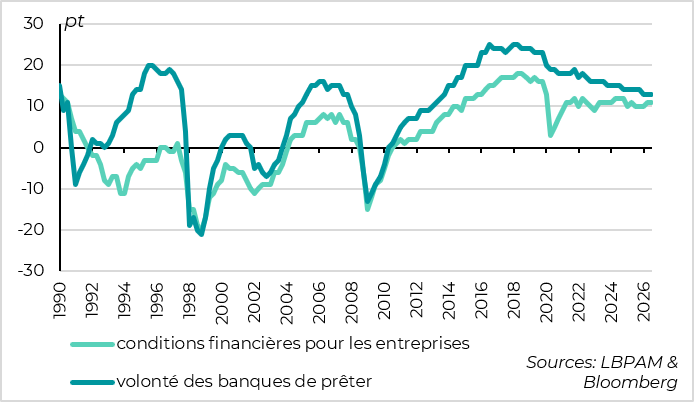
Another factor that should reassure the Bank of Japan is that companies continue to report favorable financing conditions despite six rate hikes since 2024 and a policy rate that has risen above 1% for the first time in more than three decades. Although around two-thirds of firms indicate that interest costs on their loans have increased, they still view overall financial conditions as stable and positive, while credit availability from banks remains abundant. This is true for both large and small companies.
Overall, despite the latest energy shock, adverse weather conditions over the summer, and interest rates reaching their highest levels in decades, Japanese businesses continue to report ongoing reflationary momentum in the economy. This gives the Bank of Japan confidence to continue normalizing its monetary policy, which remains accommodative by historical standards.
While a rate hike as early as October appears unlikely, we continue to expect the BoJ to raise rates in December, bringing the policy rate to 1.5%, followed by one or two additional rate hikes next year. Unlike other major central banks, we believe markets are not overstating the extent of future rate increases over the coming quarters.

Xavier Chapard
Deputy head of research